Notice: Before enrolling in this course, please take an Arabic placement test to determine your level and join the suitable class for your skills to ensure an optimal learning experience.
Foundation – Level 1 Overview
This level is designed for beginners to build a strong foundation in the Arabic language through a structured learning methodology. Each class develops vocabulary through a dedicated segment, “Today’s Word (1, 2, 3 …)”, and guides students in forming clear, correctly structured sentences. The focus is on gradual progression, accuracy, and building confidence in reading, writing, and basic communication, preparing learners for the next level.
Who Is This Level For?
This level is designed to support learners who are beginning their Arabic journey or seeking a structured way to build strong foundations.
Beginners with little or no prior knowledge of Arabic
Students who want to build a strong foundation in vocabulary and sentence structure
Learners who prefer a clear, step-by-step learning methodology
Those who want to improve accuracy in reading, writing, and basic communication
Students preparing to progress to higher levels of Arabic study
At-Tariq ilā Al-Arabiya (الطريق إلى العربية) – Level One Textbook
For Level One, we use the first volume of At-Tariq ilā Al-Arabiya (الطريق إلى العربية), a widely recognized textbook among Bengali-speaking learners in the Indian subcontinent. It has become a national standard for Muslim students learning Arabic.
The book’s key strength is its step-by-step methodology: learners begin in their native or closest language and gradually move toward full Arabic immersion. This approach has allowed translations into English, Malay, and other languages, making it accessible worldwide.
Among non-Arabic speakers, there are two main approaches to learning Arabic:
Grammar-heavy: Focuses heavily on rules with limited practical use.
Integrated: Balances grammar with language use, progressing from simple to advanced concepts.
At-Tariq ilā Al-Arabiya follows the integrated approach, combining simplicity, cultural relevance, and 55 years of the author’s teaching experience. We use volumes one to three progressively across our three-level Arabic program.
While the textbook is complete on its own, learning is enhanced with the companion exercise book, Al-Tamrin (التمرين الكتابي على الطريق إلى العربية). Starting from Level One, Class 8, students will use this alongside the main textbook to ensure smooth, continuous progression into Level Two.
Abu Taher Misbah was a respected Islamic scholar and thinker known for his contributions to Islamic education and da‘wah. His works emphasize clarity of belief, sound methodology, and the importance of structured learning grounded in classical Islamic scholarship.

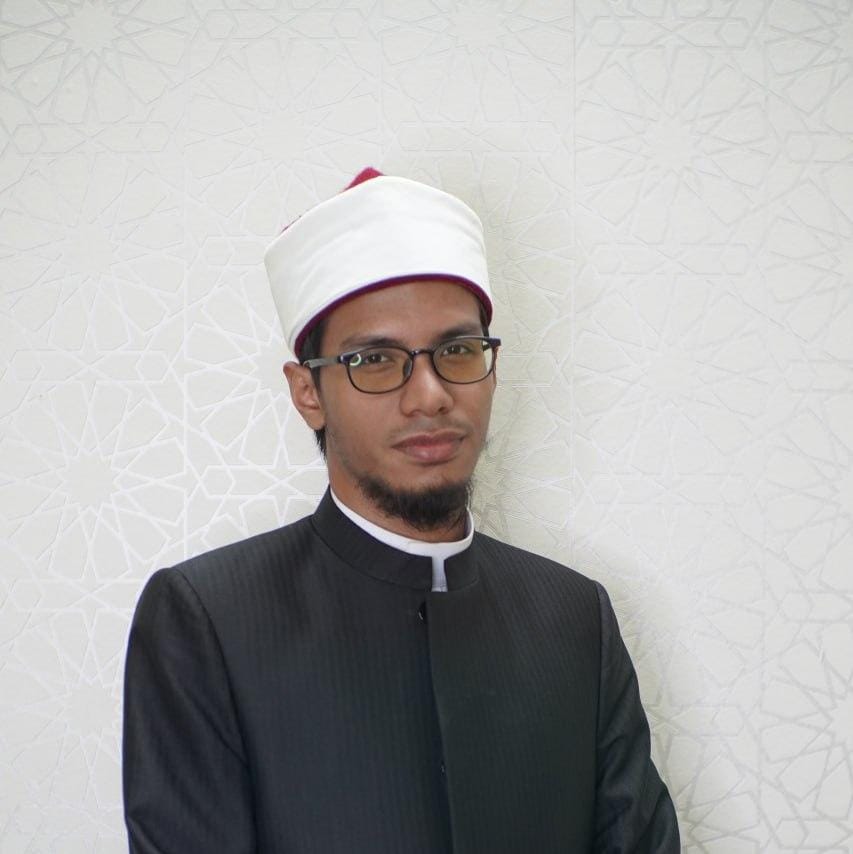
Hafez Arif Billah is a trained Arabic and Islamic Studies instructor with a strong academic foundation in Qur’anic studies, Hadith sciences, and advanced Arabic language, developed through the Qawmi madrasa tradition and further refined at Al-Azhar Islamic University, Cairo.
He completed Hifzul Qur’an, establishing firm command over Qur’anic Arabic, tajwid, and classical linguistic structure. He later studied the Madani Nisab (3rd Year) at Madrasatul Madinah, an institution founded by the originator of the Madani Nisab—one of Bangladesh’s most respected curricula, especially known for its intensive focus on Arabic grammar, rhetoric, and classical text analysis.
He earned a Dawrae Hadith (Masters-equivalent) with specialization in Uloom al-Hadith, receiving Ijazah in the six authentic Hadith collections (Kutub al-Sittah), reflecting advanced proficiency in Hadith methodology and classical Arabic comprehension.
He has successfully completed Higher Arabic Language and Literature at Markazush Sheikh Zayed, Al-Azhar Islamic University, alhamdulillah, and is scheduled to enroll in the Faculty of Islamic Studies and Arabic Language at Al-Azhar for the period 2025–2029.
This section answers common questions about the integrated structure of Arabic language learning and Qur’an studies, including level progression, prerequisites, teaching methodology, and enrollment details.
84 USD ( 02 Hours / 03 days / week.
Ustad Arif Billah (male) & Ustadha Ayesha (Female).
08 Weeks (02 Months)
24
10 Students in a Group
Arabic - English - Malay - Urdu - Bangla .
Digital, Physical
Notice: Before enrolling in this course, please take an Arabic placement test to determine your level and join the suitable class for your skills to ensure an optimal learning experience.
Level Two builds on the foundation of Level One and introduces Jumlaye Fiyliyyah (verbal sentences) as the core focus. Students learn to form action-based sentences, expanding their ability to express ideas with verbs in clear, correctly structured ways. Vocabulary continues to be developed through the “Today’s Word” method, and the structured methodology ensures steady progression in reading, writing, and communication.
This level is suitable for students who have completed Level One or have a basic understanding of Arabic:
Learners ready to move from basic to verb-based sentence construction
Students aiming to expand vocabulary and express actions clearly
Those who want to read and write longer, meaningful sentences
Learners who prefer a step-by-step methodology to build confidence in intermediate Arabic
Students preparing for advanced sentence structures and paragraph writing in Level Three
At-Tariq ilā Al-Arabiya (الطريق إلى العربية) – Volume Two
For Level Two, the second volume of At-Tariq ilā Al-Arabiya is used as the primary textbook. This volume advances students from basic language familiarity to more developed linguistic expression, with reduced reliance on the learner’s native language and increased engagement with Arabic itself.
The book continues to follow an integrated approach to language and grammar, enabling students to progress naturally from simple constructions to more complex usage. To reinforce this progression, the companion exercise book Al-Tamrīn (التمرين الكتابي على الطريق إلى العربية) is used alongside the main text, providing structured written practice that aligns with the sequential lessons of Volume Two and supports skill consolidation through applied learning.
Abu Taher Misbah was a respected Islamic scholar and thinker known for his contributions to Islamic education and da‘wah. His works emphasize clarity of belief, sound methodology, and the importance of structured learning grounded in classical Islamic scholarship.

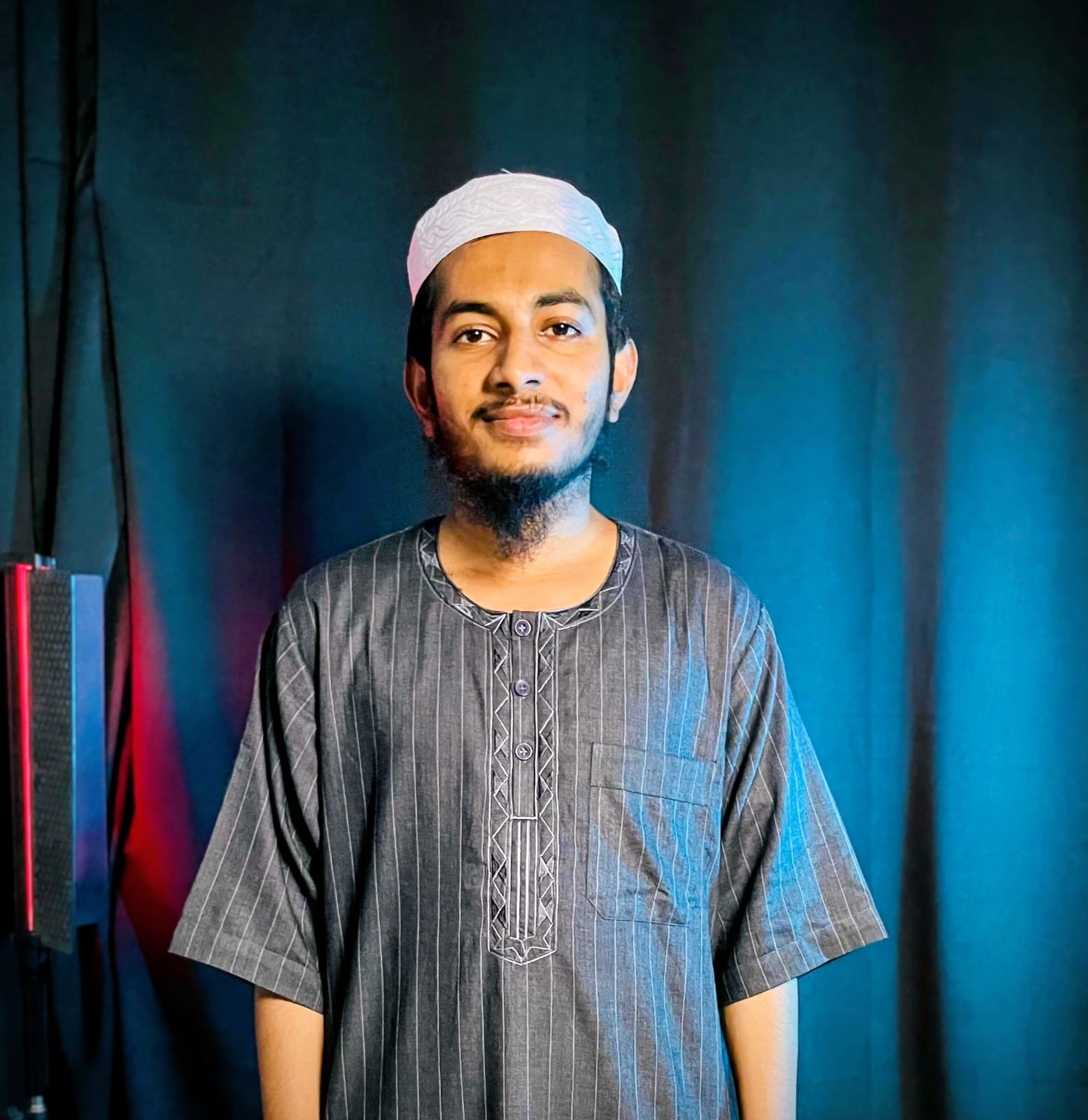
Abdullah Azzam bin Mohd Nazri, known as Abu Umar, is a dedicated Qur’anic scholar and Arabic educator from Kota Bharu, Kelantan, Malaysia. He began his formal Islamic education early, excelling in Qur’anic memorisation and classical studies, and completed advanced Qur’an, Tafsir, and Hadith programmes under renowned traditional scholars in Malaysia, Thailand, India, Bangladesh, and Pakistan.
Abu Umar combines his deep traditional training with contemporary academic credentials, having completed STAM at Pondok Moden Al-Abaqirah, Kuala Lumpur, an intensive Arabic programme at Markaz Lughah Shaikh Zayed, Cairo, and currently pursuing a Bachelor’s in Usuluddin at Al-Azhar University, Cairo.
As a Core Qur’an and Arabic Instructor, he brings extensive experience in Tajweed, Tilawah, Nazara, and Arabic language instruction, guiding students with a balance of classical scholarship and modern pedagogical methods.
A complete 3 Level Program.
This section answers common questions about the integrated structure of Arabic language learning and Qur’an studies, including level progression, prerequisites, teaching methodology, and enrollment details.
84 USD ( 02 Hours / 03 days / week.
Ustad Arif Billah (Male) & Ustadha Ayesha (Female).
16 Weeks (04 Months)
48
10 Students in a Group
Arabic - English - Malay - Urdu - Bangla .
Digital, Physical
Notice: Before enrolling in this course, please take an Arabic placement test to determine your level and join the suitable class for your skills to ensure an optimal learning experience.
Level Three focuses on advancing students’ ability to construct complex sentences and paragraphs while consolidating vocabulary and grammar knowledge. Building on Level Two’s Jumlaye Fiyliyyah (verb-based sentences), students learn to combine multiple sentence types and express ideas more fluently. By the final classes, learners are introduced to simple Qur’anic and Hadith texts, enabling them to understand basic meanings and apply their language skills in authentic contexts.
This level is suitable for students who have completed Level Two:
Learners ready to form complex sentences and cohesive paragraphs
Students who want to expand vocabulary for intermediate to advanced communication
Those preparing to read and understand simple Qur’anic and Hadith texts
Learners aiming to confidently express ideas in writing and conversation
Students seeking to consolidate grammar and sentence structure for independent use
At-Tariq ilā Al-Arabiya (الطريق إلى العربية) – Volume Three
Advances students from intermediate to advanced Arabic proficiency, focusing on grammar, vocabulary, and applied reading in authentic Arabic contexts.
At-Tariq ilā As-Sarf (الطريق إلى الصرف)
Focuses on Arabic morphology, helping students understand word derivations, roots, and structures in depth.
At-Tariq ilā An-Nahu (الطريق إلى النحو)
Focuses on advanced Arabic syntax and grammatical rules, enabling precise and accurate sentence construction.
Author: Abu Taher Misbah
Qasasun Nabiyyin lil-Atfal (قصص الأنبياء للأطفال) – Volume 1
Introduces classical stories of the Prophets to develop reading comprehension and contextual understanding.
Al-Qiratur Rashidah (القراءة الراشدة) – Volume 1
Strengthens literary analysis, vocabulary, and fluency through structured narratives suitable for developing advanced reading skills.
Author: Abul Hasan Ali Hasani Nadwi.
Abu Taher Misbah was a respected Islamic scholar and thinker known for his contributions to Islamic education and da‘wah. His works emphasize clarity of belief, sound methodology, and the importance of structured learning grounded in classical Islamic scholarship.

Ustad Arif Billah is an experienced Arabic and Qur’an educator with a strong foundation in classical Arabic grammar, literature, and Qur’anic studies. He has dedicated years to teaching students at all levels, focusing on building fluency in reading, writing, and comprehension.
He combines traditional Arabic pedagogy with practical, learner-centered methods, guiding students from foundational language skills to advanced Arabic proficiency and Qur’anic understanding.
A 03 Level Complete Program.
This section answers common questions about the integrated structure of Arabic language learning and Qur’an studies, including level progression, prerequisites, teaching methodology, and enrollment details.
84 USD ( 02 Hours / 03 days / week.
Ustad Arif Billah (Male) & Ustadha Ayesha (Female).
24 Weeks (06 Months)
72
10 Students in a Group
Arabic - English - Malay - Urdu - Bangla .
Digital, Physical
MIDRAJ AL ULOOM INTERNATIONAL (MUI) is an online academic institution dedicated to structured education in Arabic language, Qur’anic studies, and the core Islamic sciences, delivered through a progressive curriculum grounded in scholarly tradition.
© 2026 Created with Imran Hossain